(Don't Use Canvas to contact me, use email link)
Office: LD 156-S, 278-9244
Class: LE 101, Tuesday and Thursday from 10:30 - 11:45 am
http://woodahl.physics.iupui.edu/Astro105
Is the University open/closed today?
Final Exam on Thursday, May 2nd from 10:30 AM to 11:45 AM
Final Exam is NOT comprehensive, hence let's call it "Exam 3"
Our last lecture is Thursday April 25th.
Please remember: 5 Bonus Points are available to all students if the following condition is met: 80% class participation in filling out the official IUPUI Online Course Evaluation.
Final Exam on Thursday, May 2nd from 10:30 AM to 11:45 AM
Final Exam is NOT comprehensive, hence let's call it "Exam 3"
Our last lecture is Thursday April 25th.
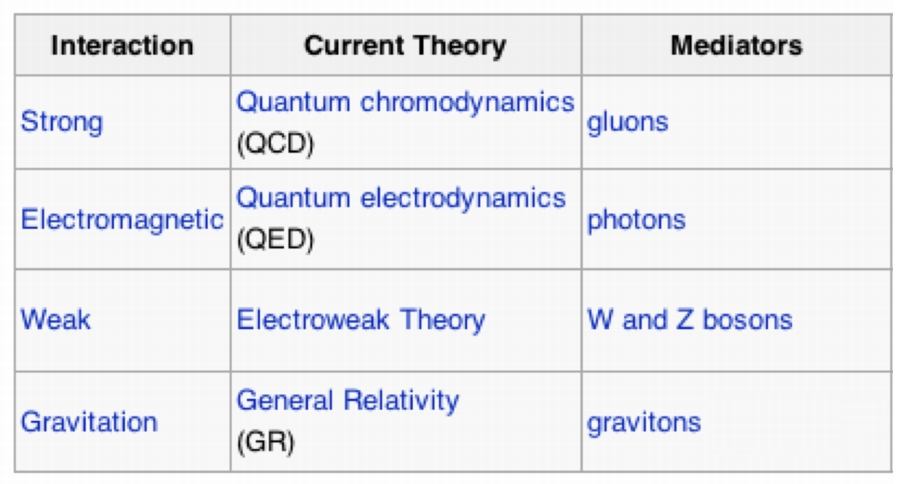
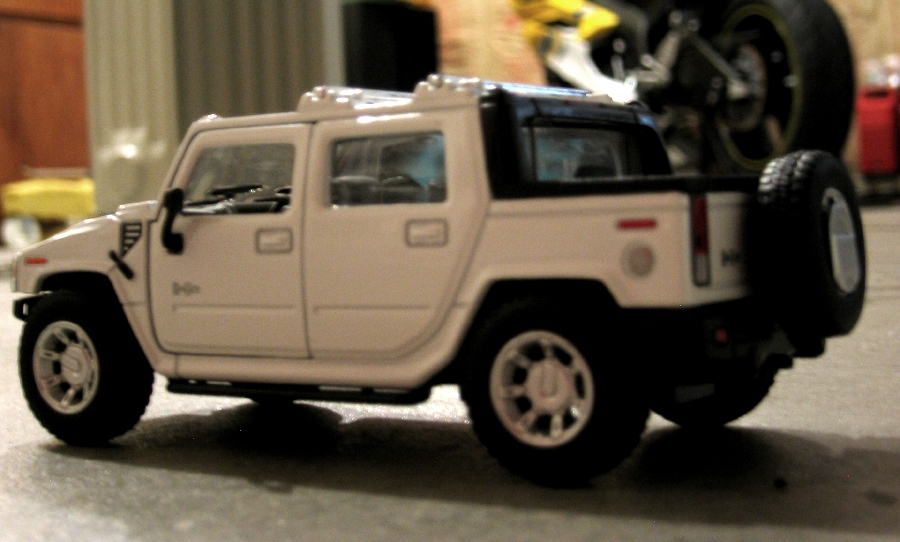
Gravity: Binds Objects with Mass (Motorcycle's Front Wheel Overcomes Gravity)
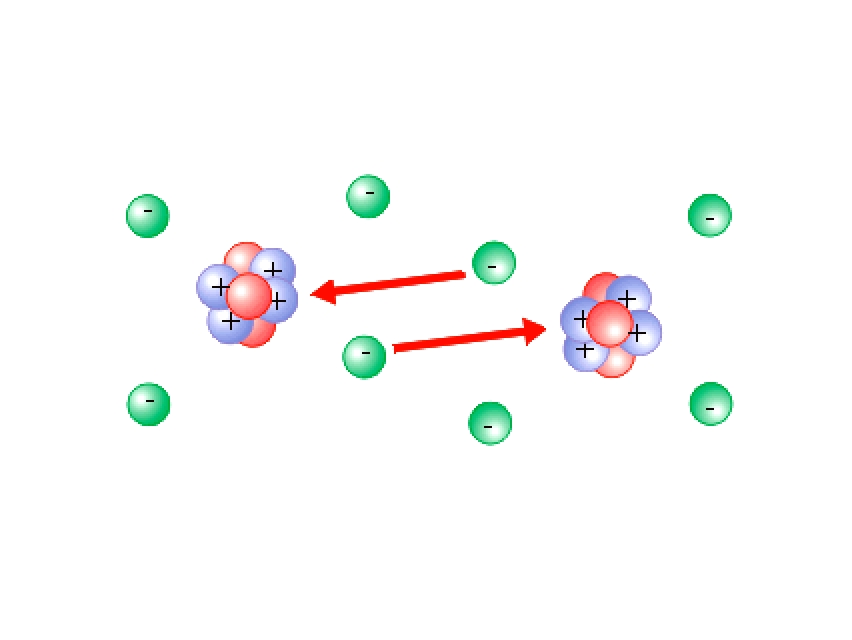
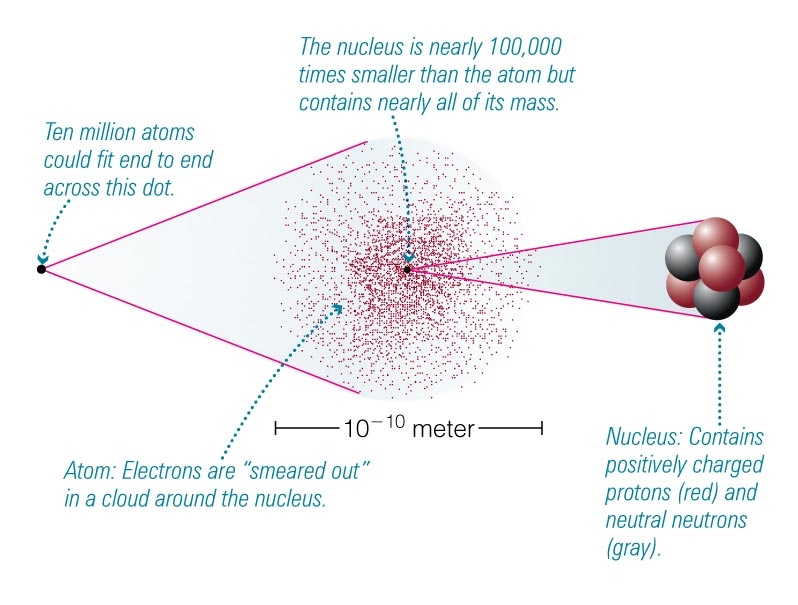
Electromagnetic: Binds Electrons to Protons to Form Atoms (Beryllium Atom)
Strong: Binds Quarks to Form Protons, Neutrons, and Nuclei (Helium Nucleus)
Take-Home Project is due April 11 before 5 PM
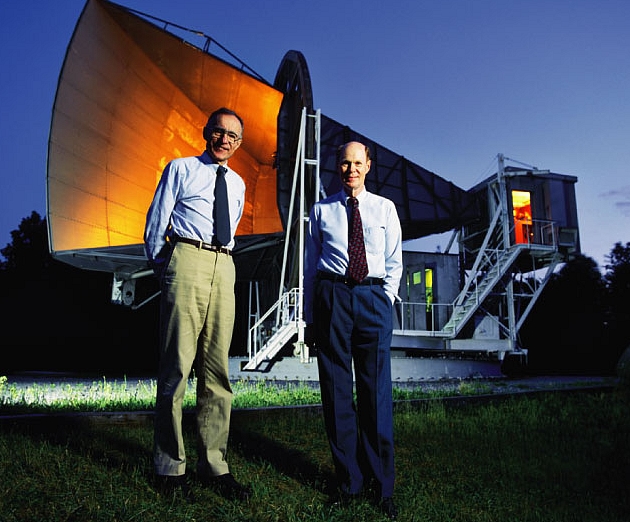
Evidence for the Big Bang Theory: Penzias and Wilson and their Microwave Antenna
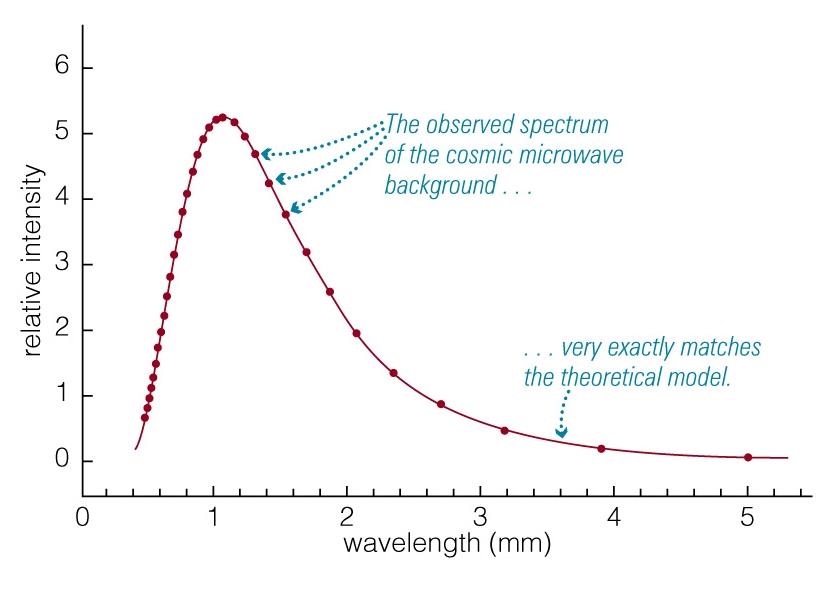
Spectrum of Microwave Radiation Closely Matches Big Bang Theory
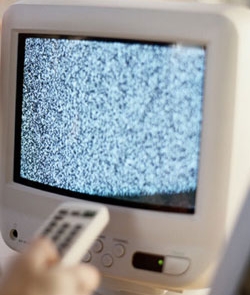
"High-Tech" Big Bang Detector in Your Home: Snowy Channel on an Antenna-Fed TV (1% is CMBR)
Take-Home Project is due April 11 before 5 PM
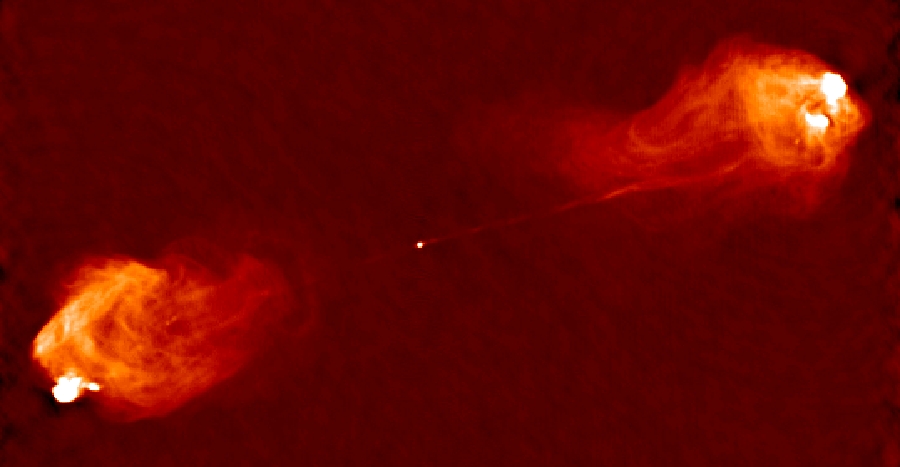
The Jets of Cygnus A (color enhanced, microwave frequencies)
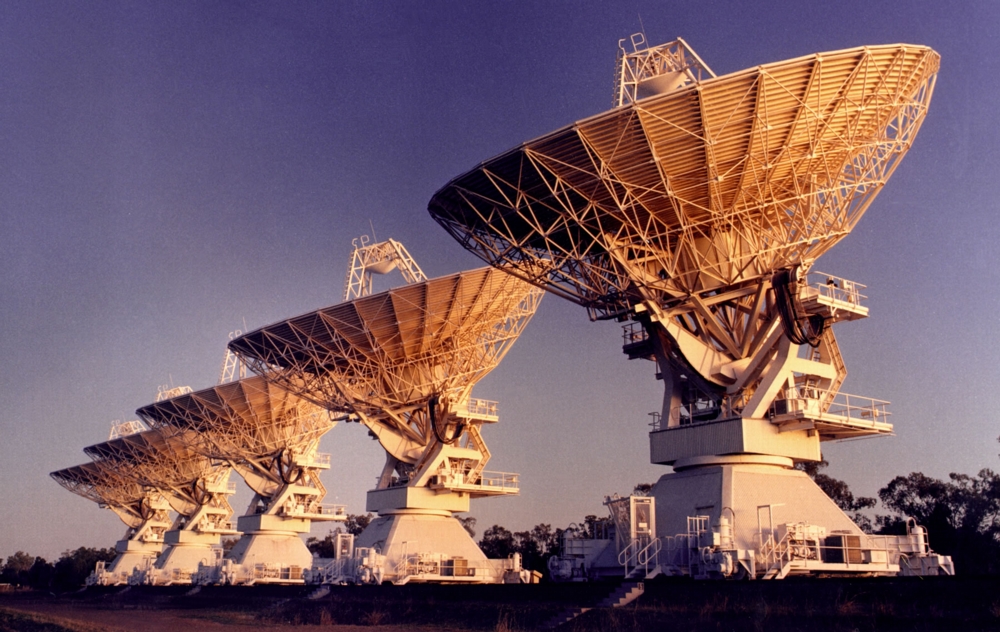
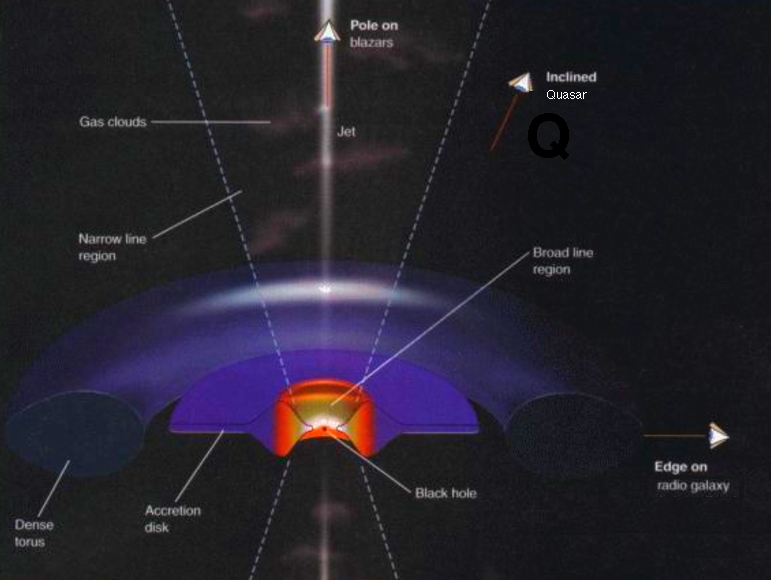
Looking for Quasars and Radio Galaxies: Australia's Telescope Compact Array (ATCA)
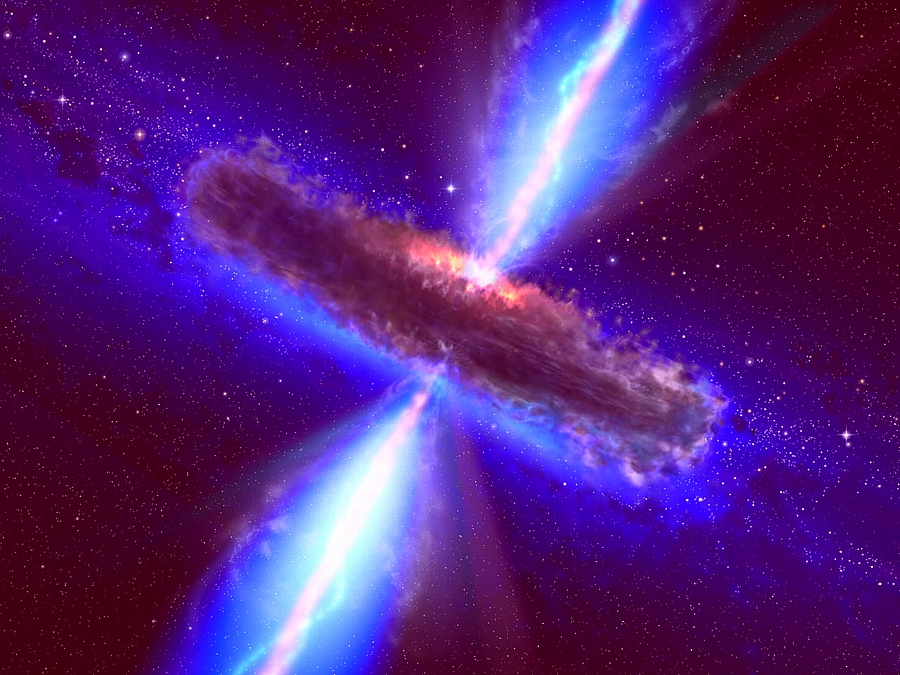
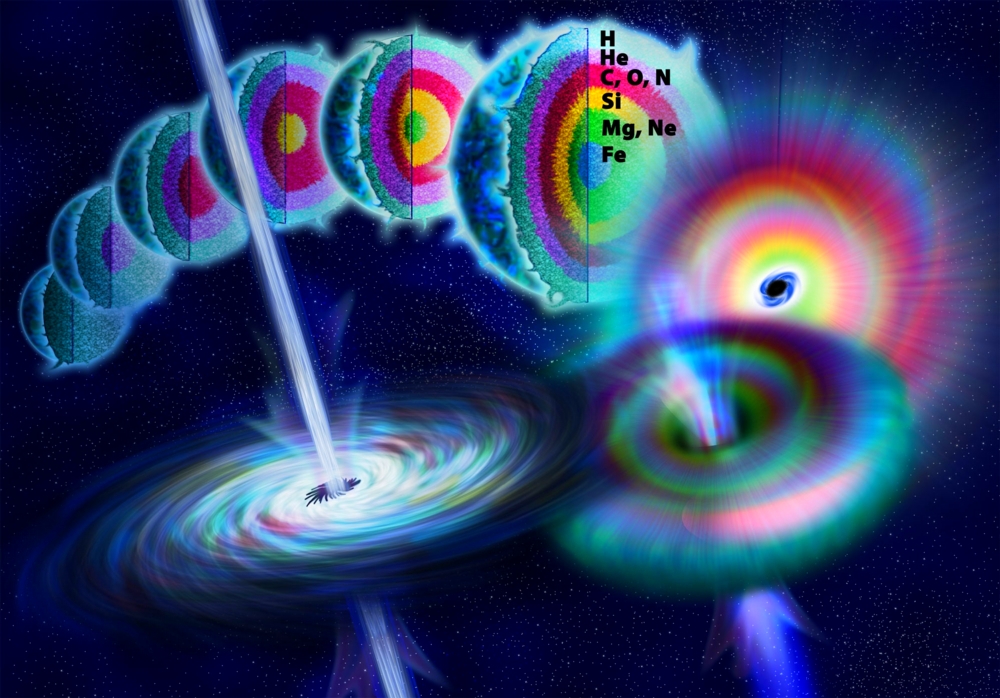
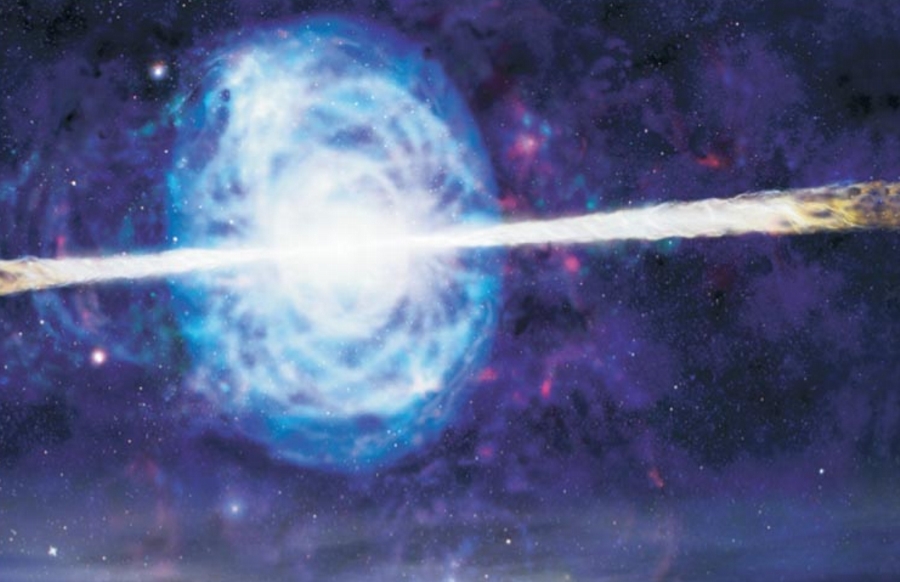
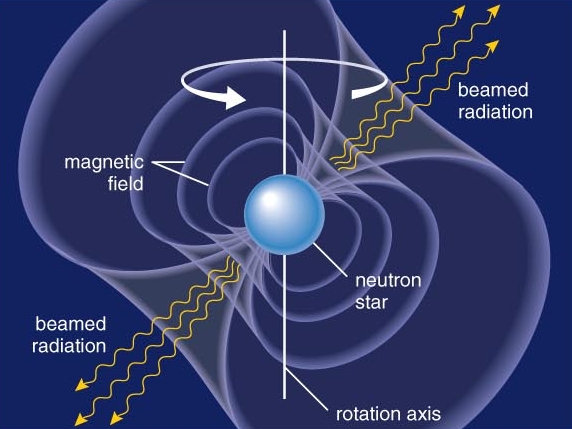
Massive Star Collapses Forming Black Hole: Jets Along Rotation Axis Produce Gamma-Ray Long-Burst
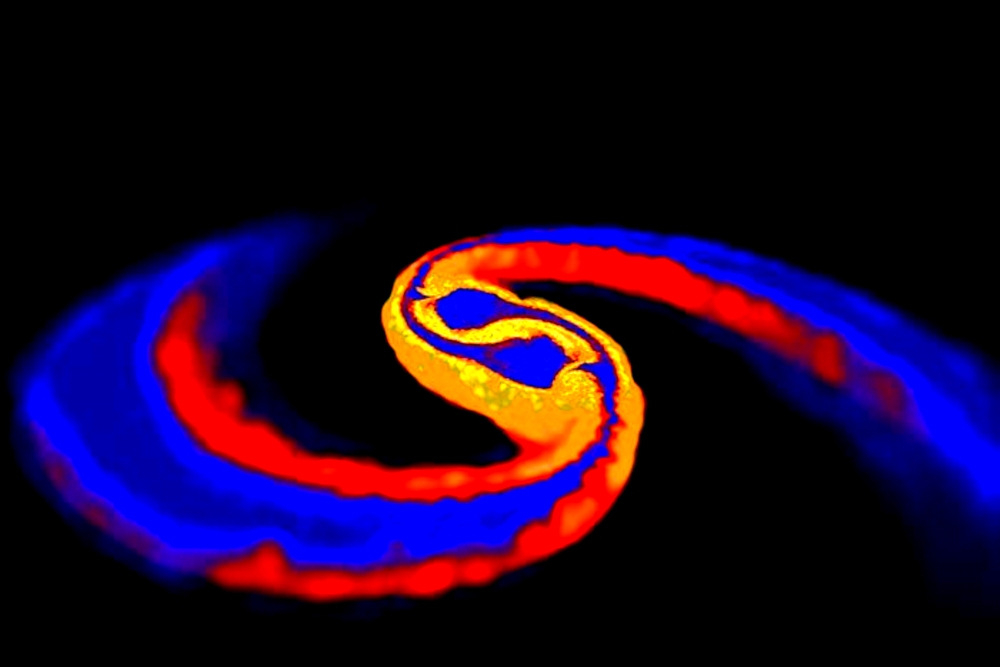
Gamma-Ray Short-Burst: Collision Involving Neutron Stars & Black Holes
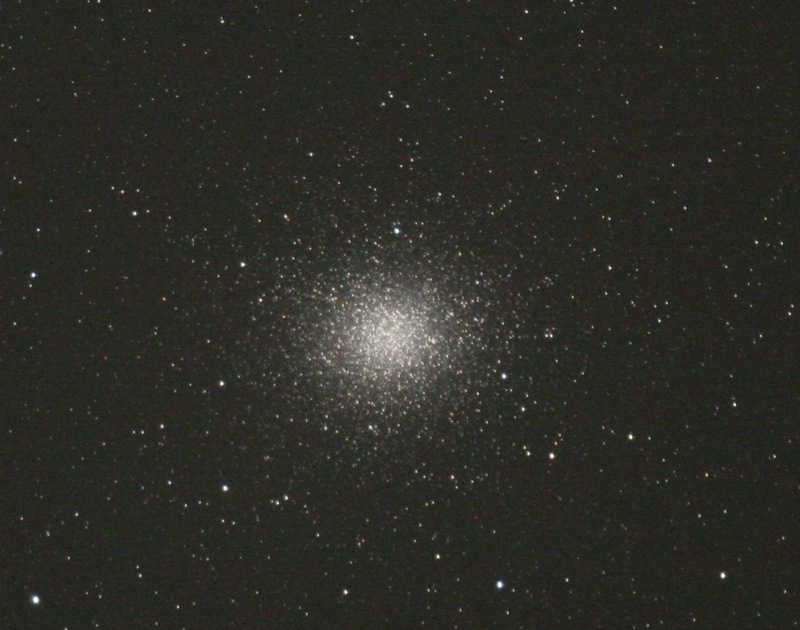
A Globular Cluster in Milky Way: Omega Centauri (NGC5139), Visible by Unaided Eye
LSS of Universe: Clusters & Superclusters that Neighbor the Milky Way (Near-Infrared Frequencies)
65 questions, multiple choice, use the study guide and review your notes
Rememberize to bring a #2 pencil
''.. I brought my pencil, gimme something to write on, man ..'' Scantron sheets will be provided, pick one up when you enter
Take-Home Project is due April 11 before 5 PM
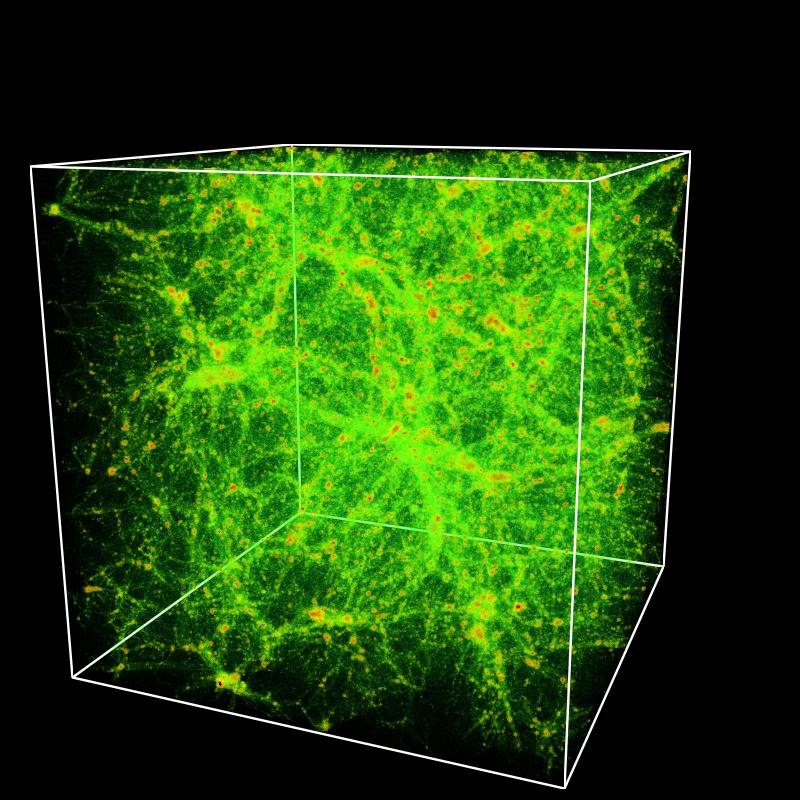
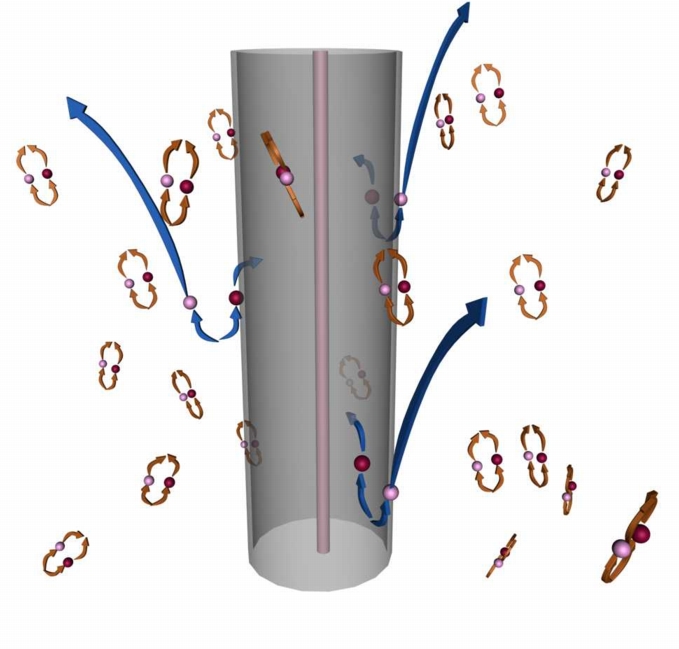
Dark Matter (Imagine that the green/yellow/orange strands are dark and you cannot see them.)
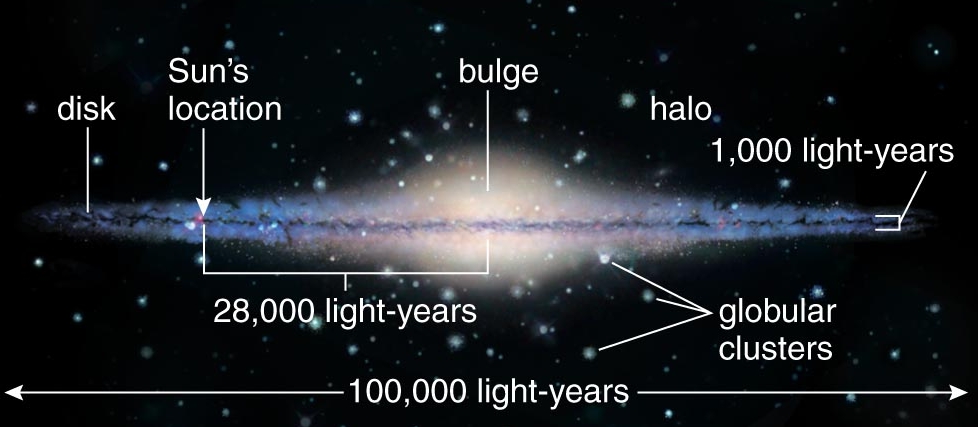
Spiral Structure of Milky Way Galaxy -- possibly a "Barred-Spiral"
Mark your Calendar now, so that you do not forget the due date of 5 pm on Thursday, April 11.
Any submittal after 5 pm will be ignored. Do not wait until 4:50 pm to submit
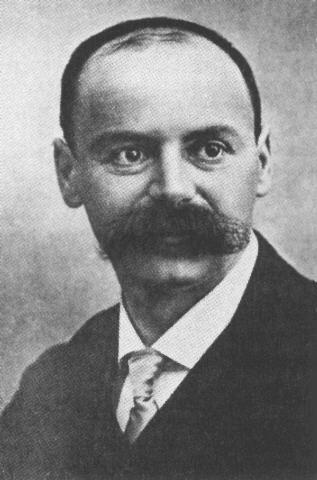
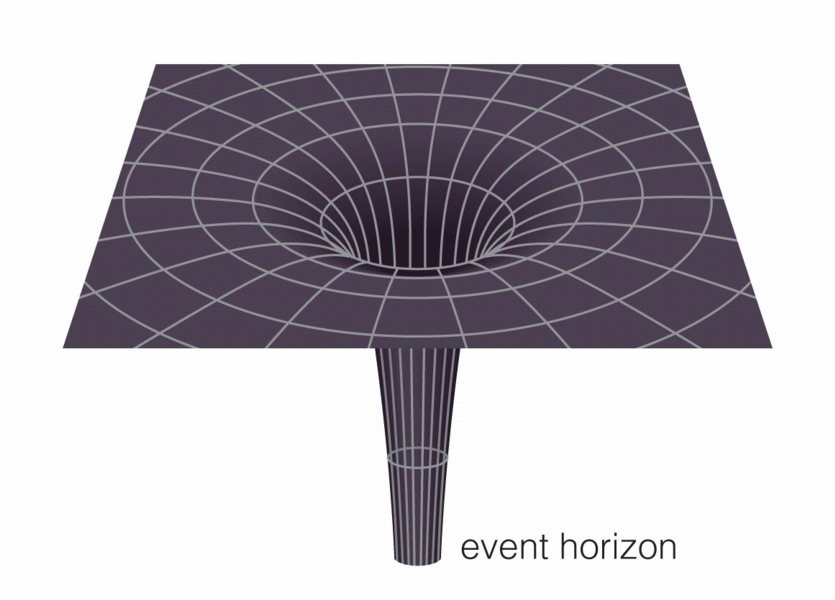
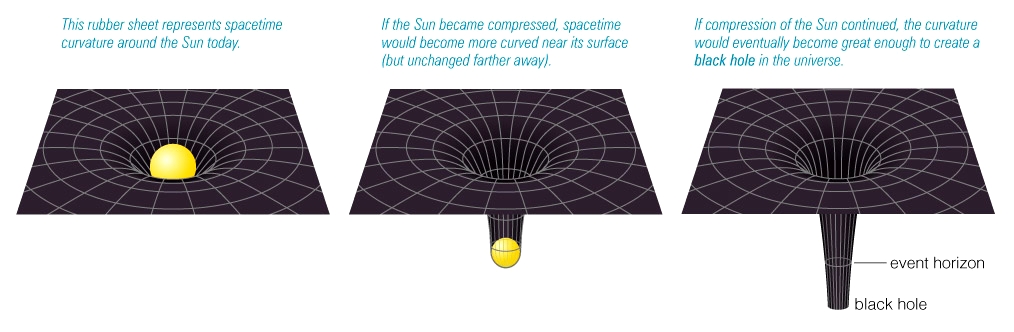
Schwarzschild: Discovered Event Horizon of Black Hole (Schwarzschild Radius)
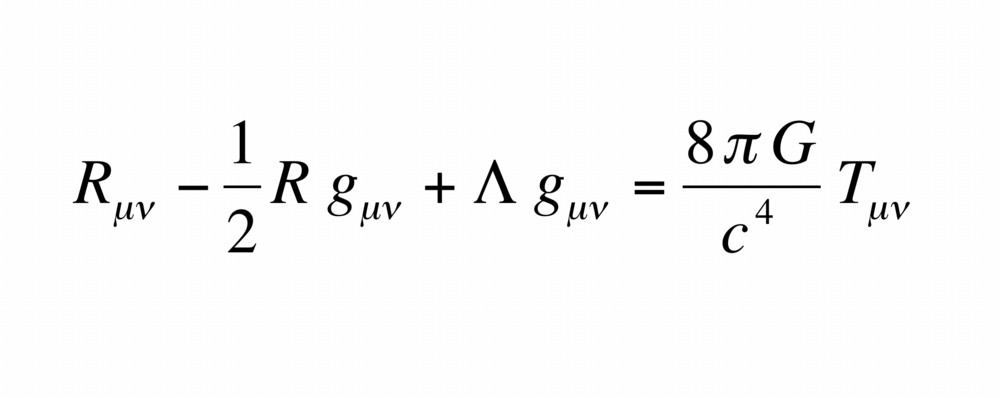
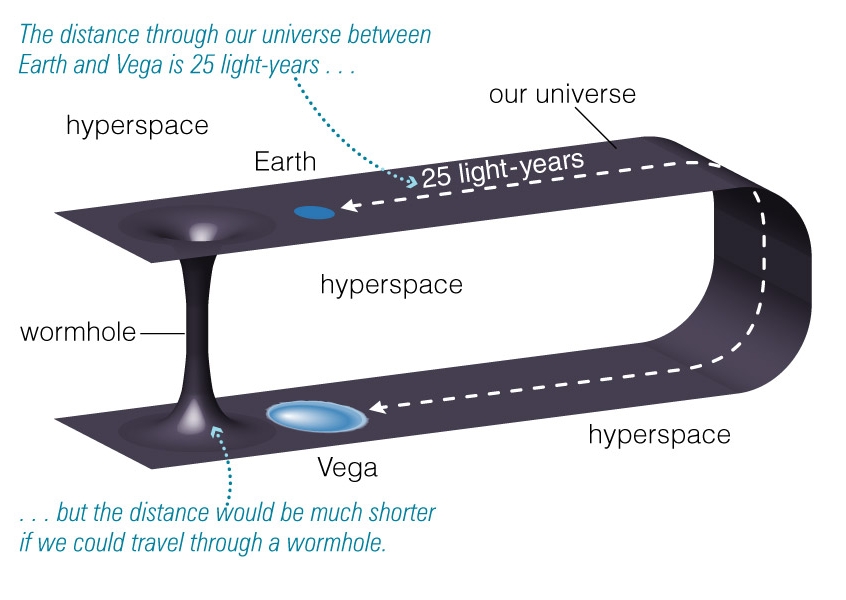
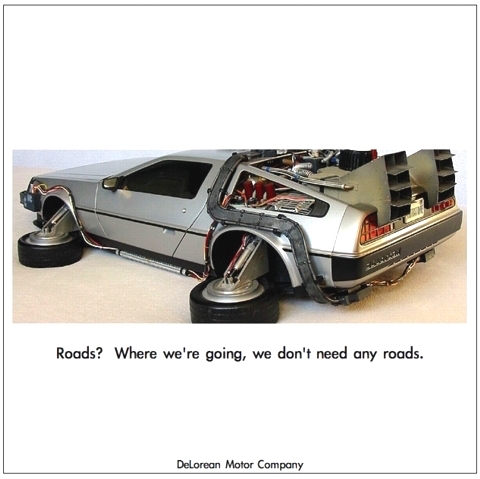
General Relativity Allows for Wormhole Solutions for Faster than Light Travel
"Back To The Past": General Relativity Allows for Wormhole Solutions for Time Travel
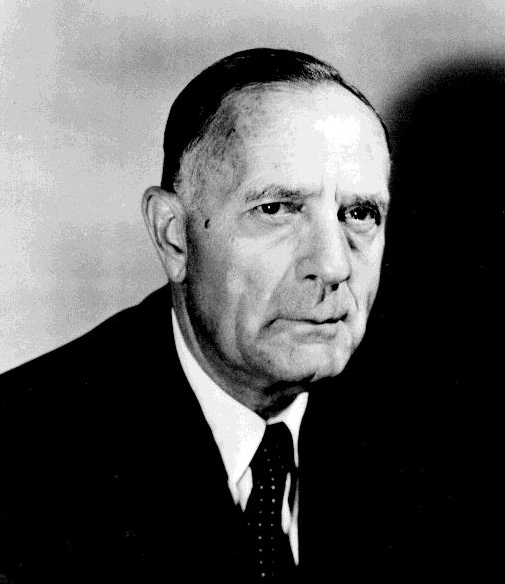
Edwin Hubble: Determined M31 Was a Galaxy 2 Million Light-Years Away
4 questions, multiple choice, review your notes from the last three lectures
In no less than 1000 words, TYPED, submitted as a PDF (not Word or txt, etc.) to bwoodahl@iu.edu, explain in your own words the "Unruh Effect" and its connection to black holes. Make sure you include your full name, the due date is Friday March 29th at 5:00 PM.
4 questions, multiple choice, review your notes from the last lecture
An Interstellar Medium Containing Carbon Monoxide (Radio Frequencies)
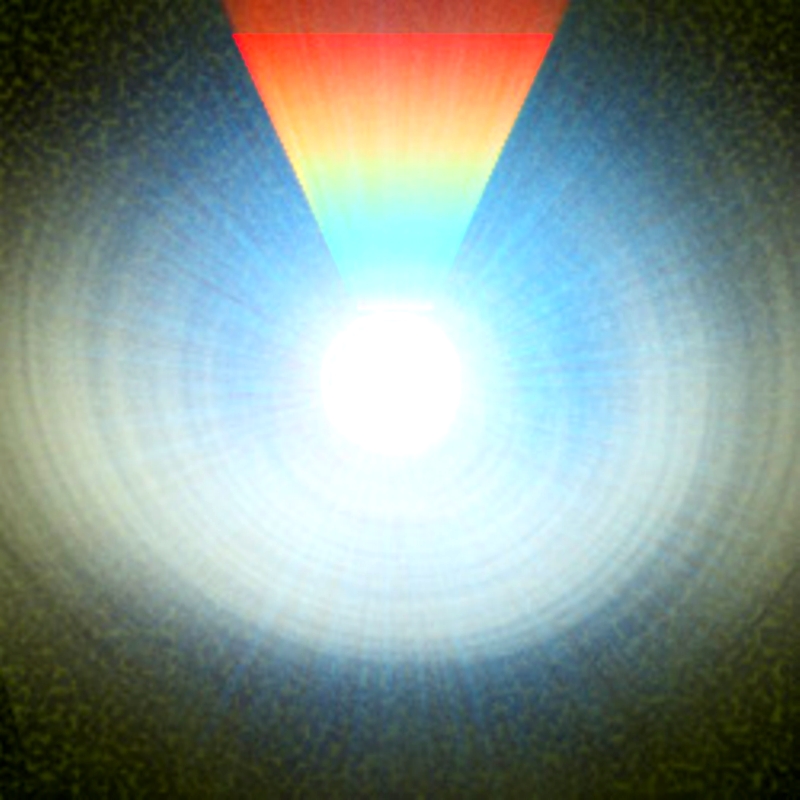
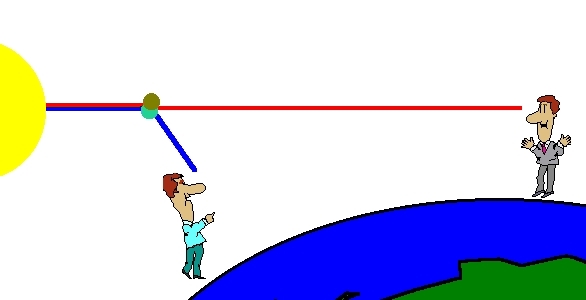
Atmospheric Scattering of Light: Blue Daytime Skies and Red Dawn
65 questions, all are multiple choice
Rememberize to bring a #2 pencil (or HB lead if mechanical pencil)
''.. I brought my pencil, gimme something to write on, man ..'' OpScan sheets will be provided, pick one up when you enter
4 questions, multiple choice, review your notes from the last four lectures
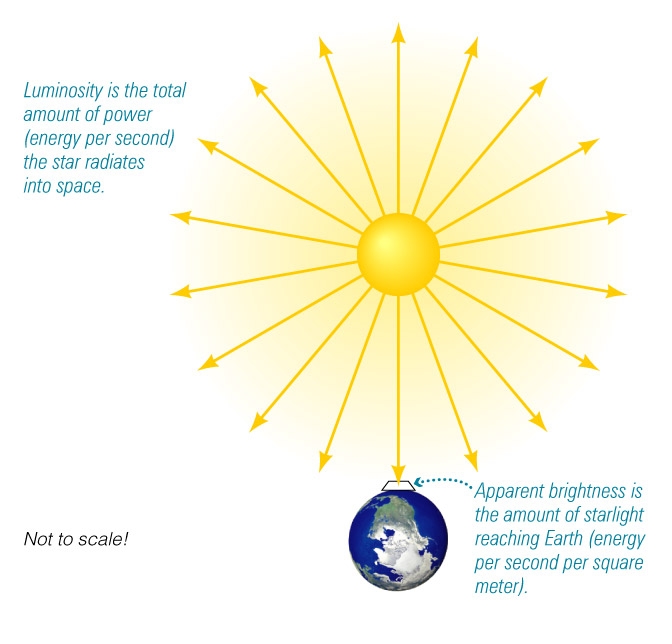
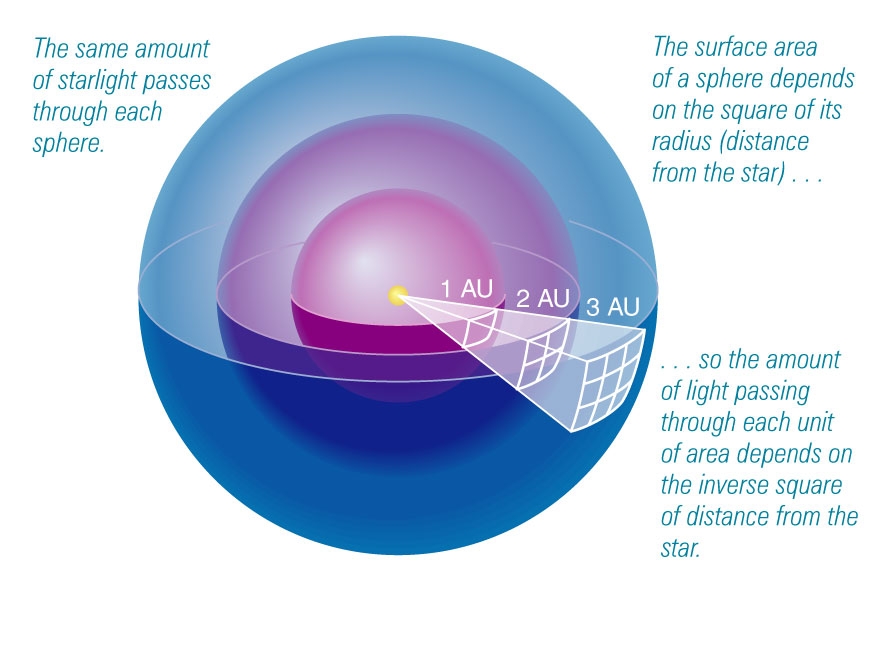
Absolute Brightness or Luminosity Versus Apparent Brightness
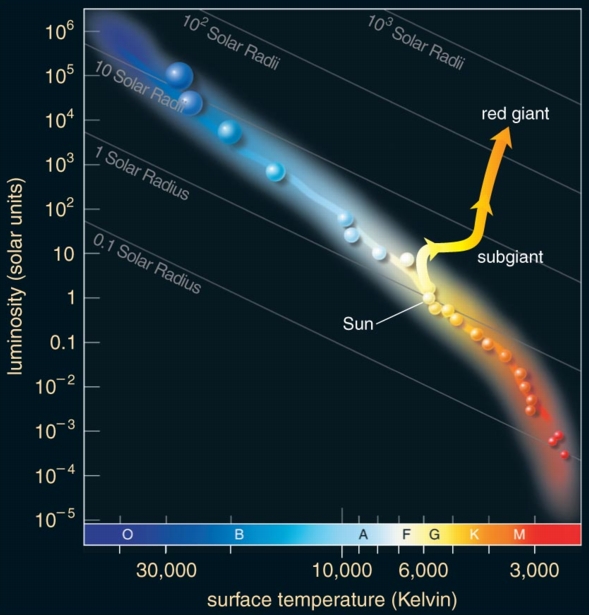
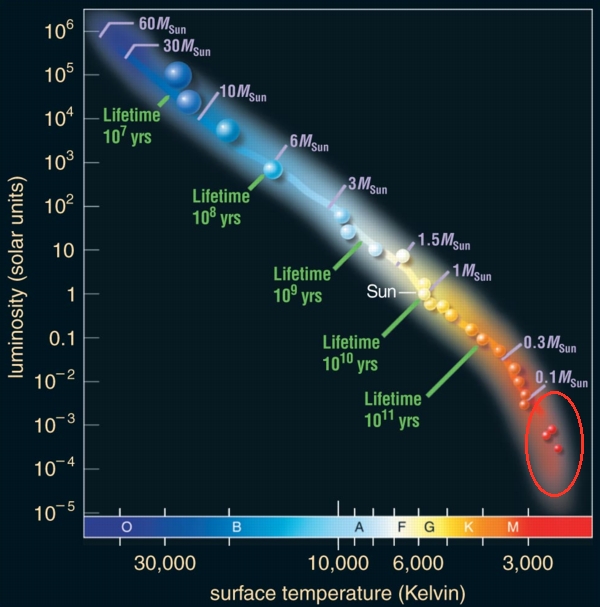
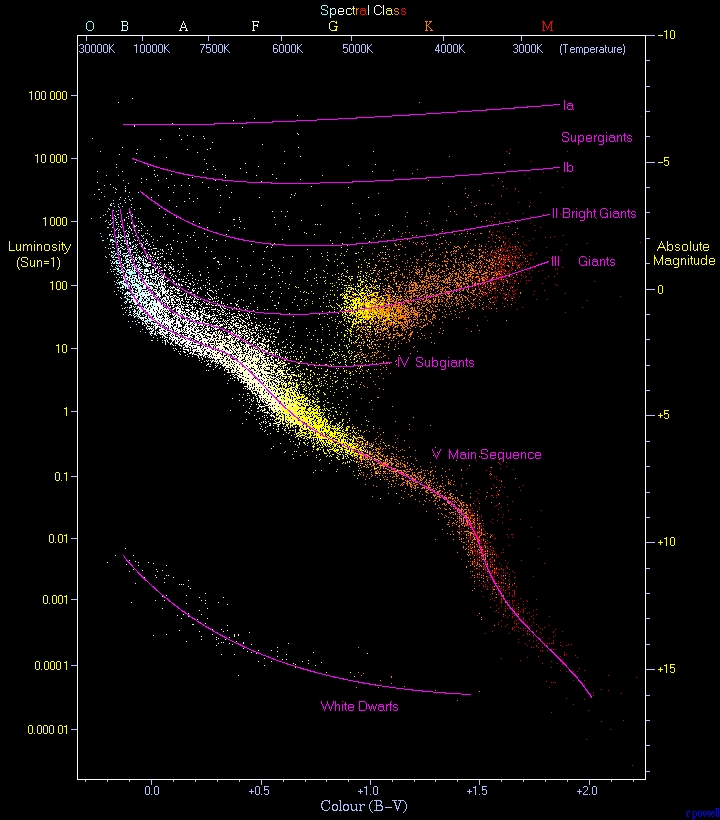
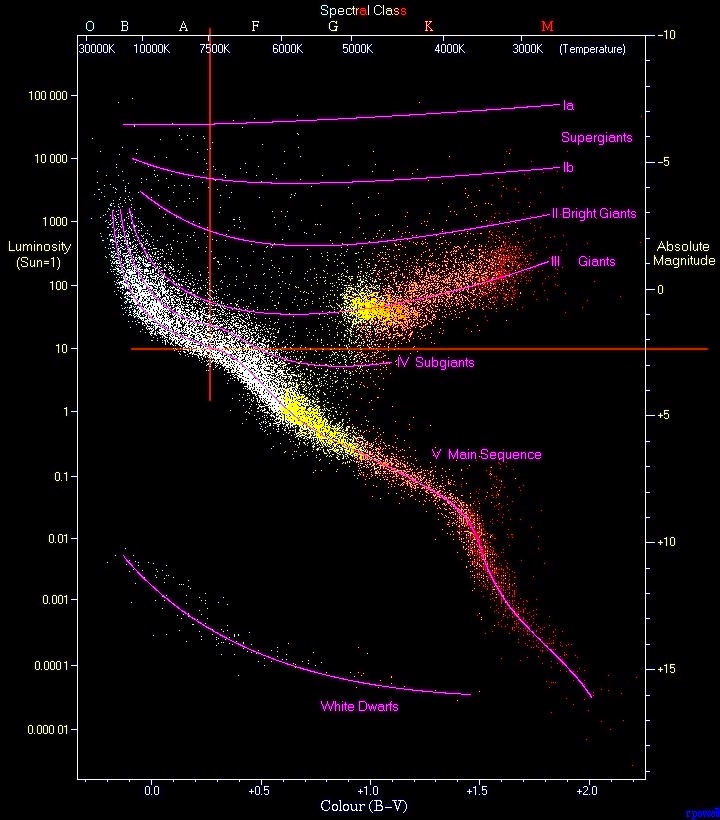
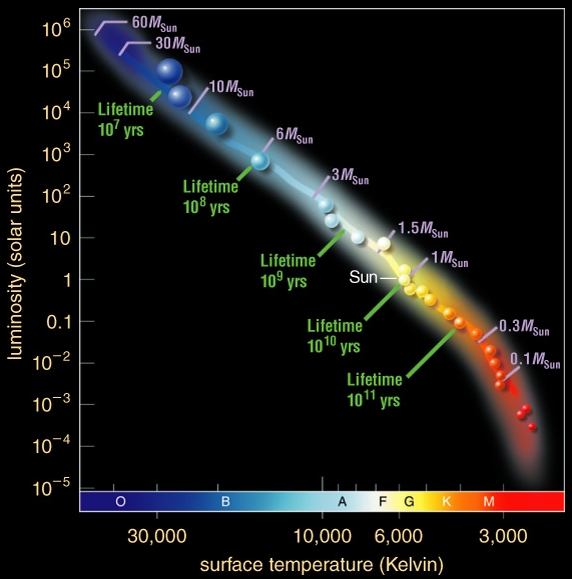
Traditional H-R Diagram with the Absolute Magnitude Scale (on right-hand side)
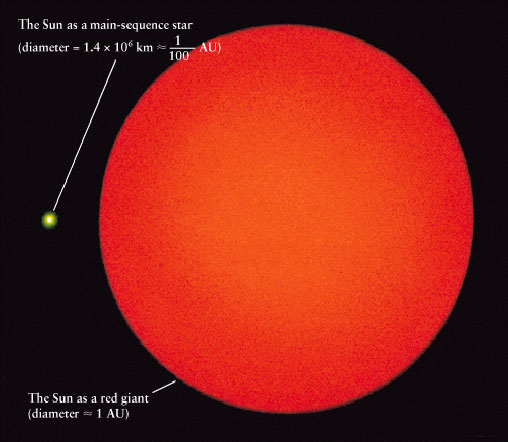
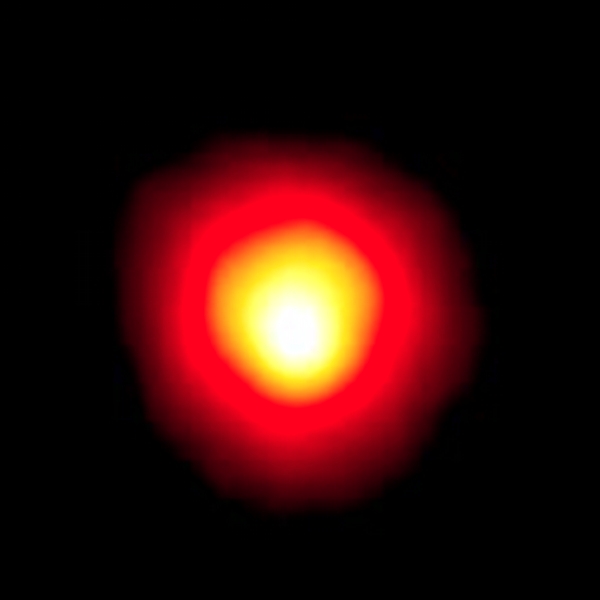
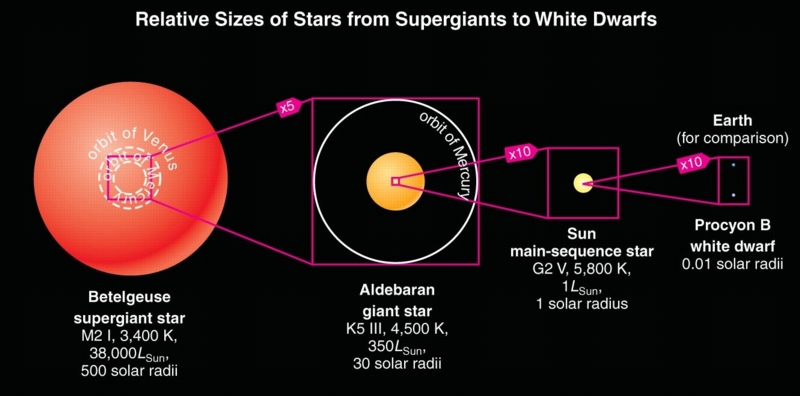
The Red SuperGiant Betelgeuse (Hubble): Diameter is Larger than Jupiter's Orbit Around the Sun
4 questions, multiple choice, review your notes from the last FOUR lectures
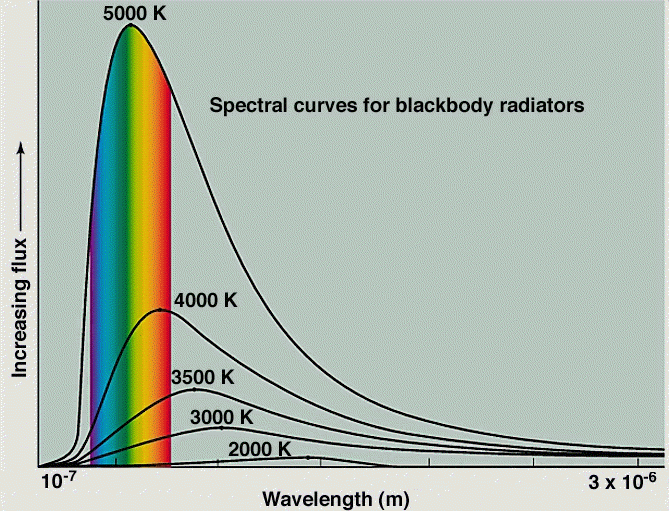
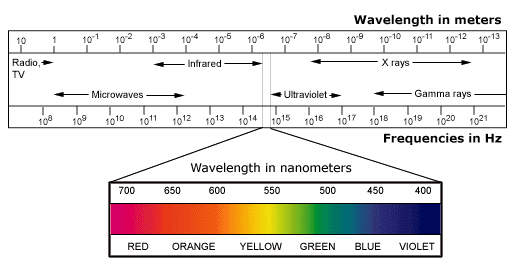
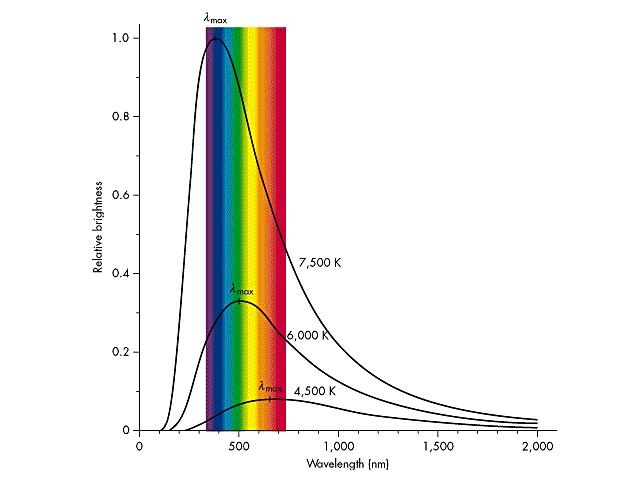
Stars with Higher Surface Temperatures Emit Mostly Shorter Wavelengths
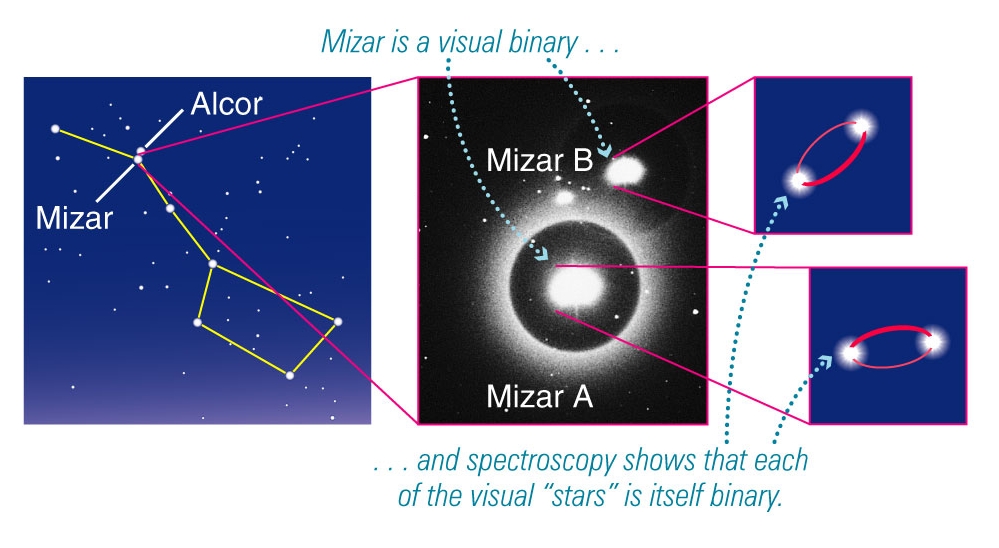
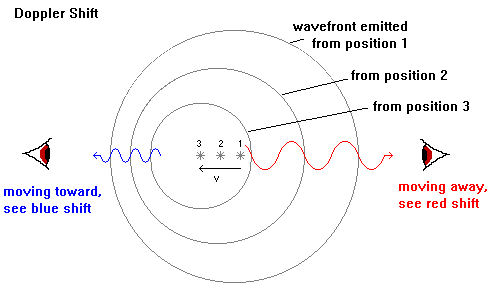
Mass Information from Doppler Shift of Spectra from a Binary Star System
4 questions, multiple choice, review your notes from the past two weeks
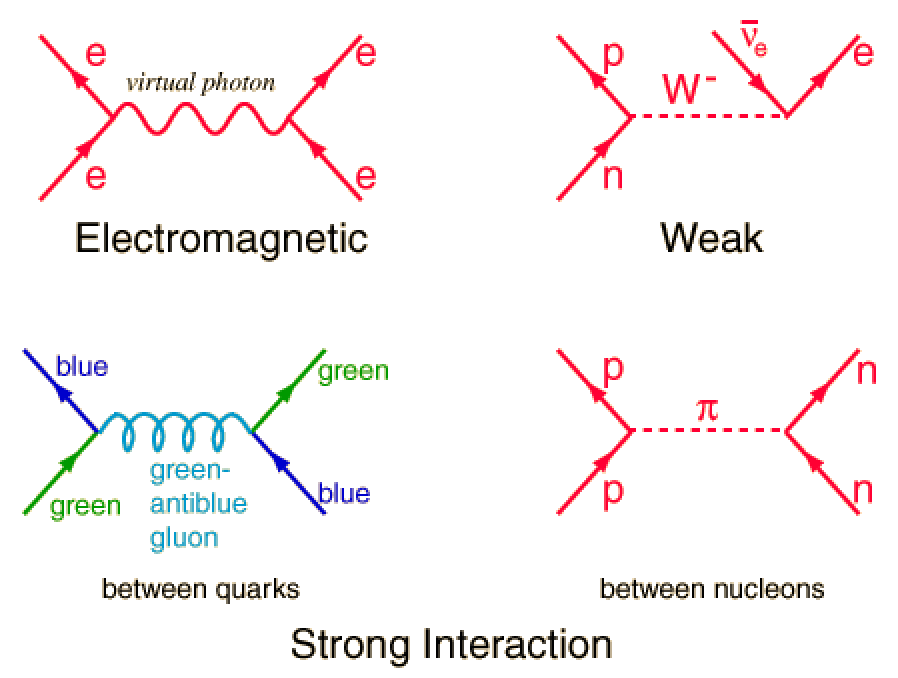
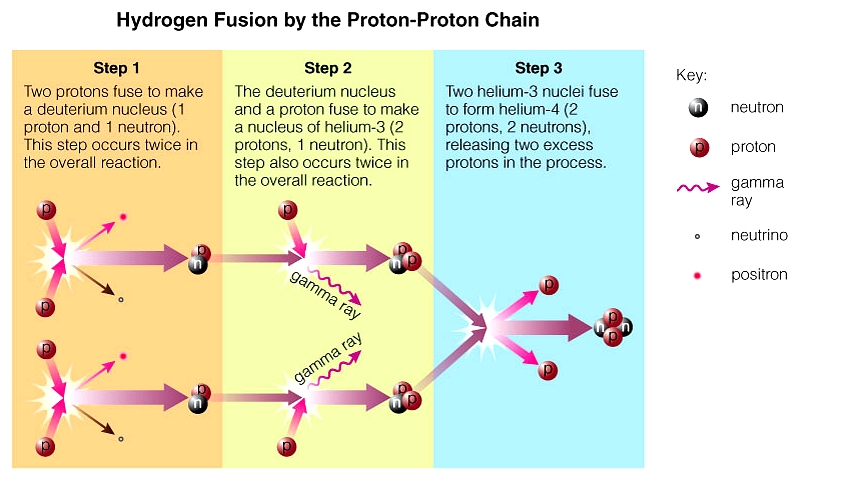
In particular, look over proton-proton chain and the four forces -- notably gravity (binds mass) and electromagnetic (binds electric charges)
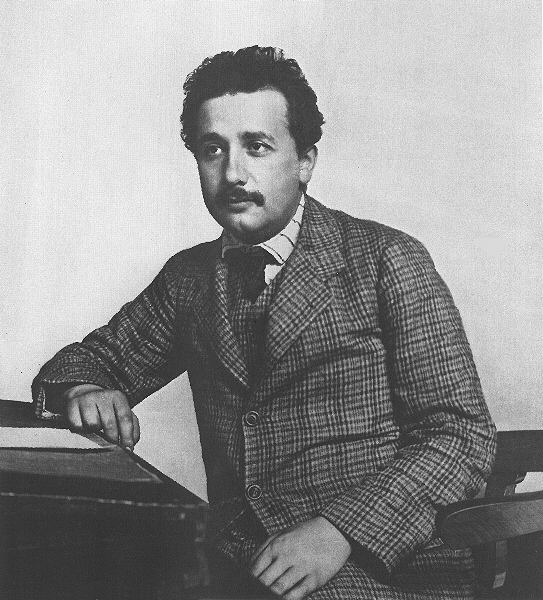
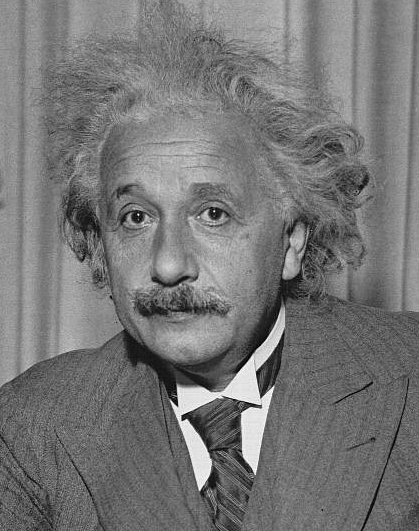
Einstein (in 1904): Speed Of Light is the "Speed Limit of Our Universe"
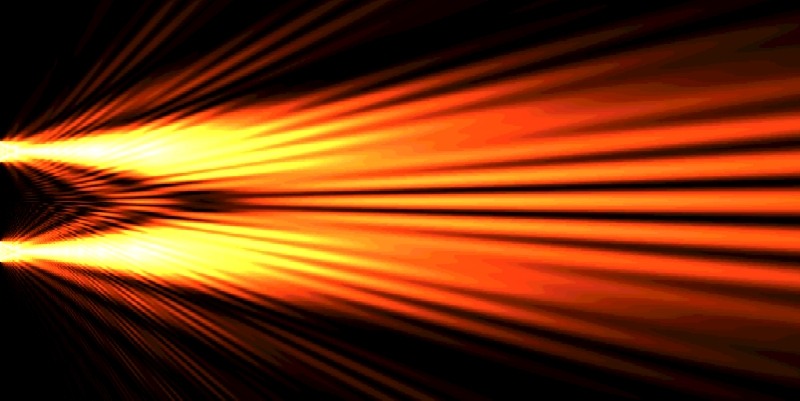
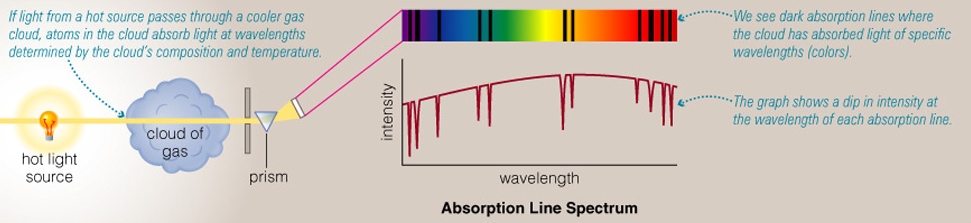
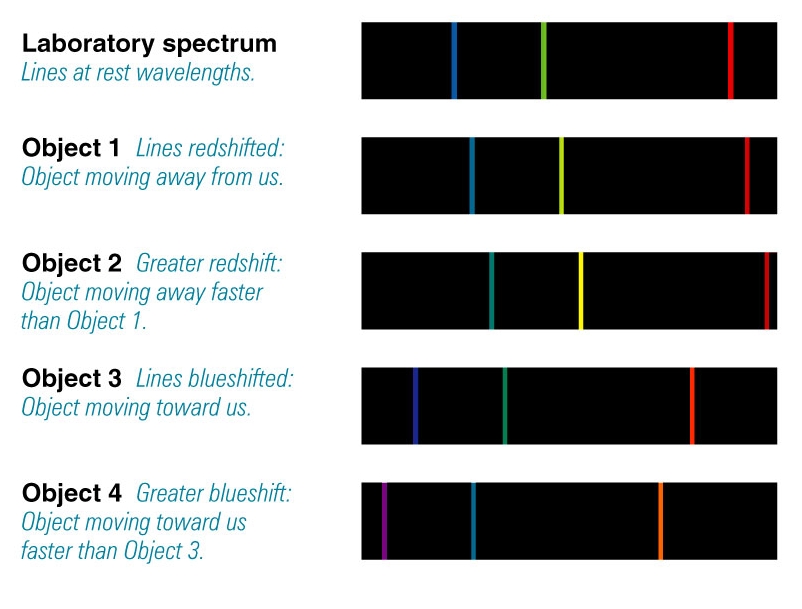
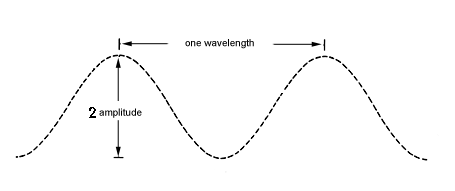
Visible Light is a Small Part of the Entire Electromagnetic Spectrum
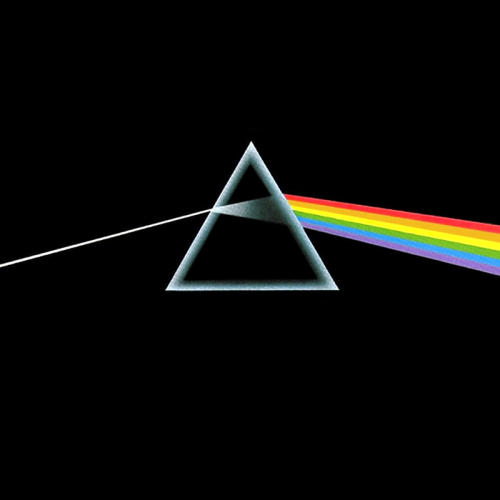
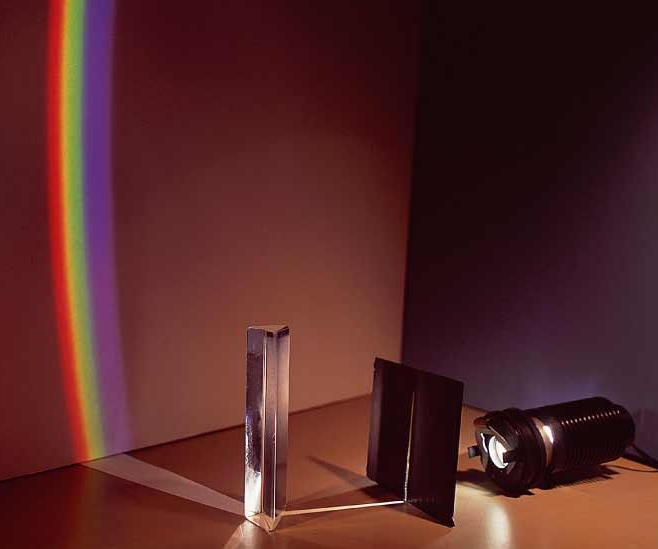
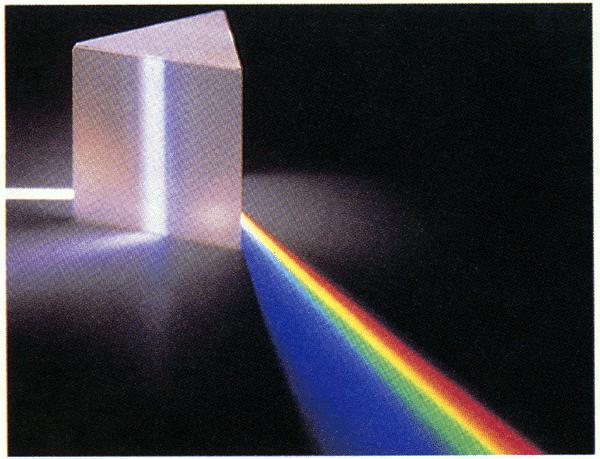
Isaac Newton (in 1670): White Light Contains All the Visible Colors (Visible Frequencies)
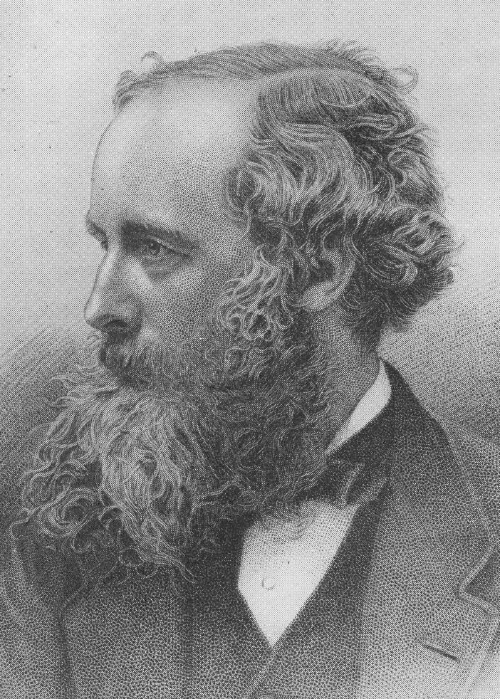
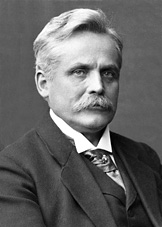
James Maxwell (in 1860): Father of the Famous Maxwell Equations Governing the Behavior of Light
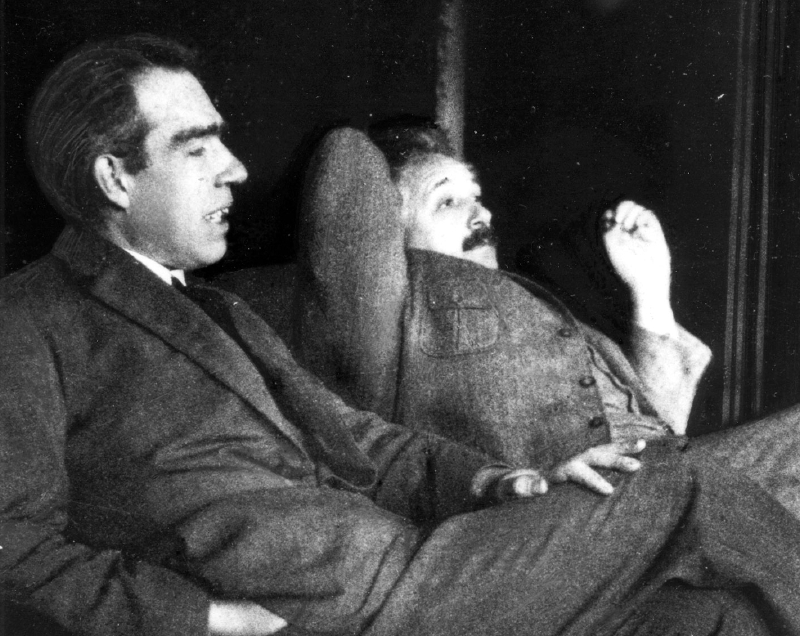
Niels Bohr (sitting with Einstein): Architect of Modern Theory of Atomic Physics
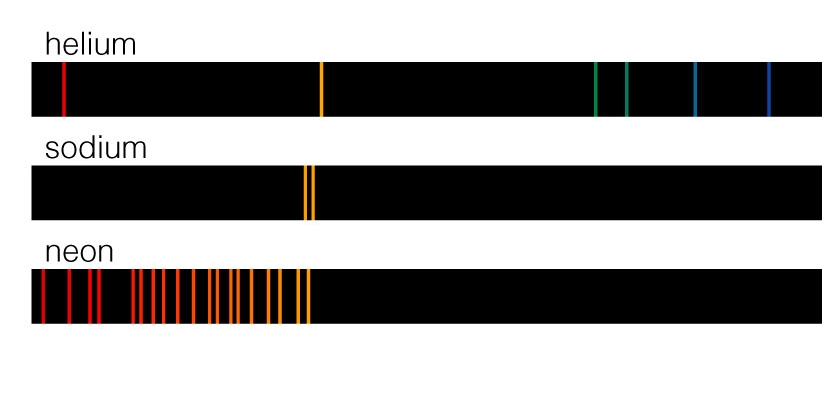
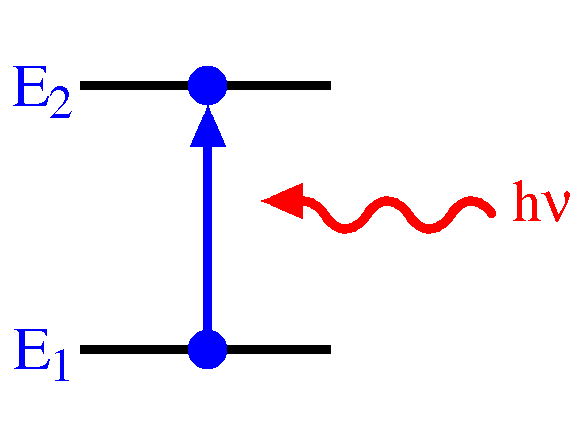
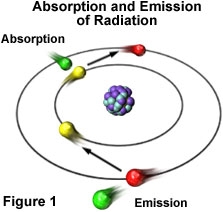
Photon (wavy line) Being Absorbed by Atom -> Electron (solid blue line) Jumps Up into Higher Orbit
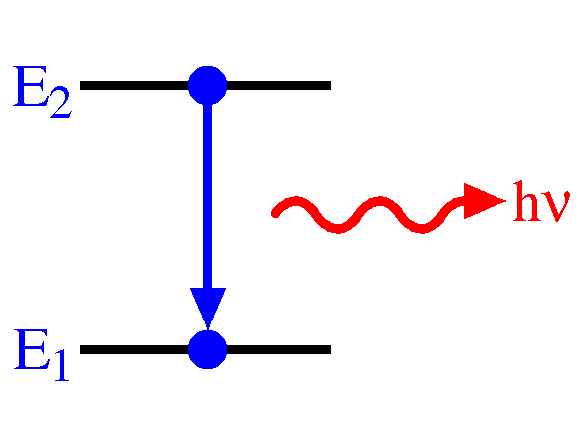
Atom Emitting a Photon (wavy line) -> Electron (solid blue line) Jumps Down into Lower Orbit
4 questions, multiple choice, review your notes from last week's two lectures
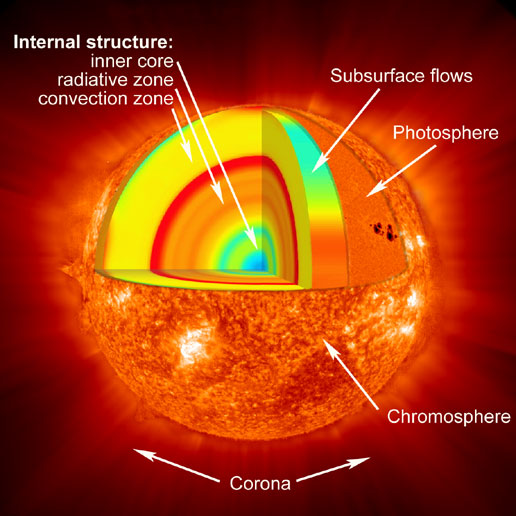
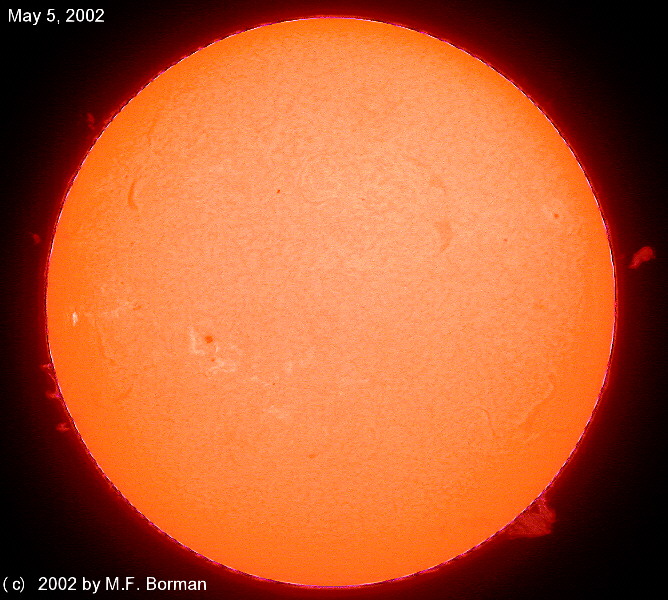
Know: temperature scales: Kelvin (absolute), Fahrenheit, Celsius; Galileo (first to watch sunspots -- rotation rate); multiplying large numbers; and temperature of the Sun at various locations
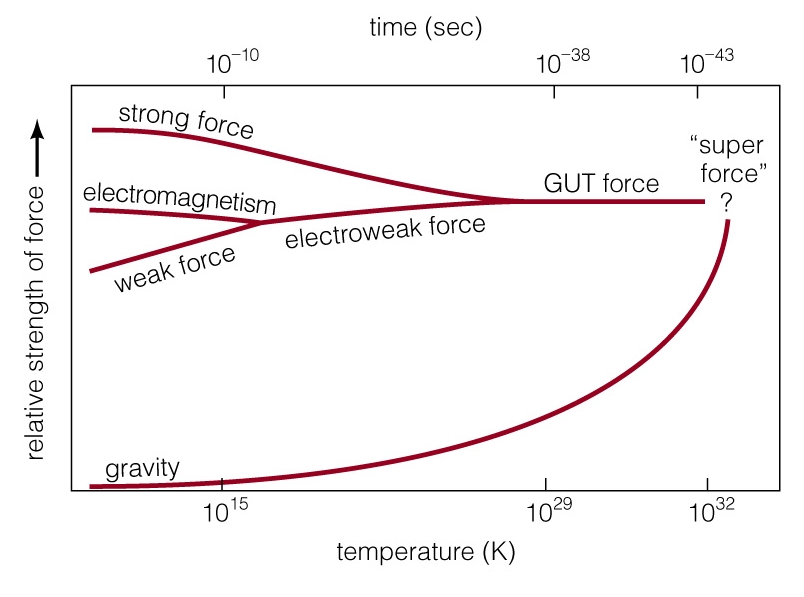
The 4 Fundamental Forces Occur Only at Moderately Low Temperatures
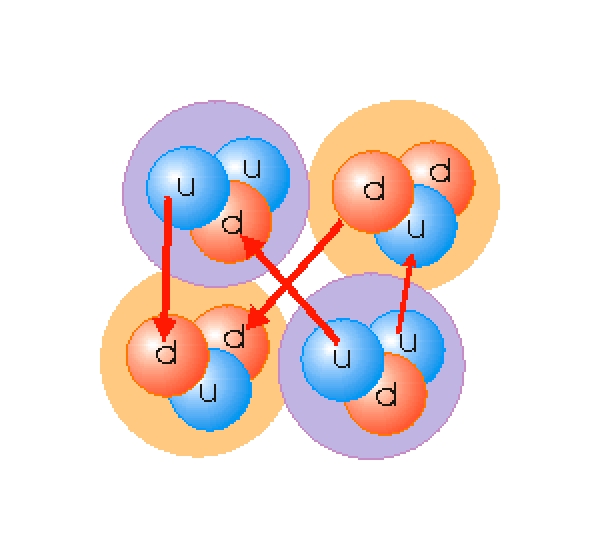
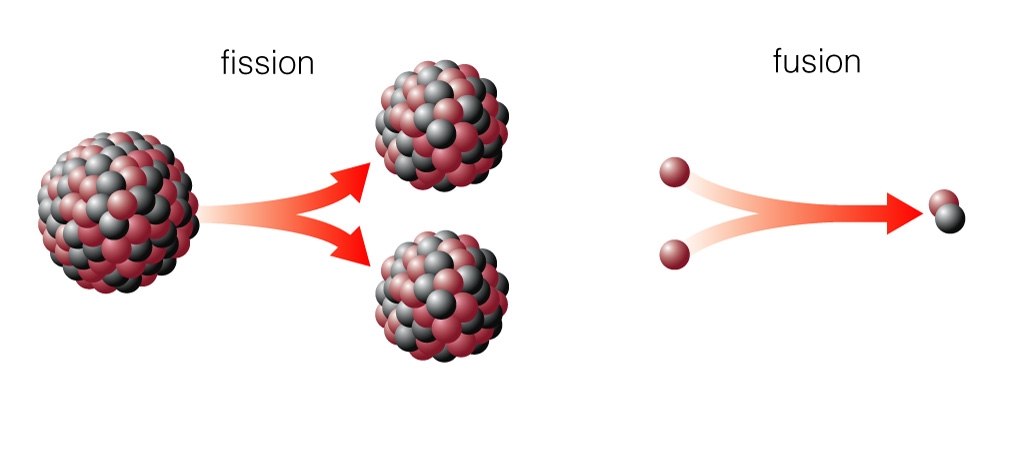
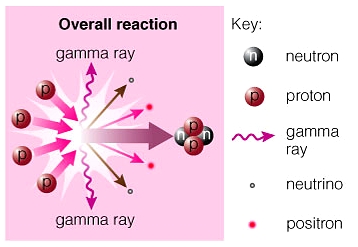
Sun's Proton-Proton Chain Fusion Reaction (4 Protons Produce Helium + Energy)
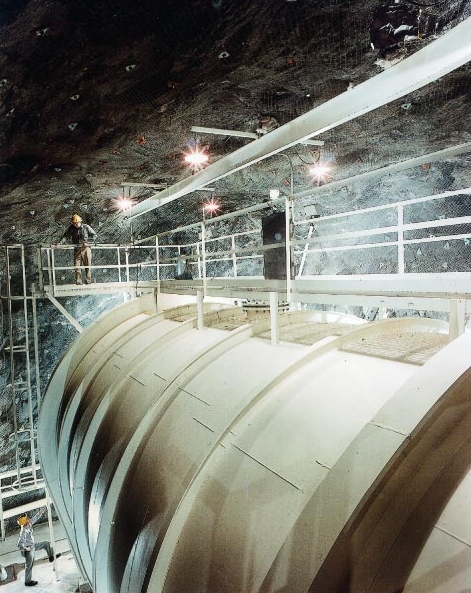
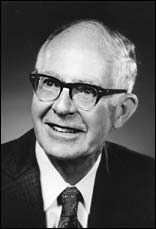
Ray Davis, 2002 Nobel Prize in Physics for the Detection of Cosmic Neutrinos During 1960's
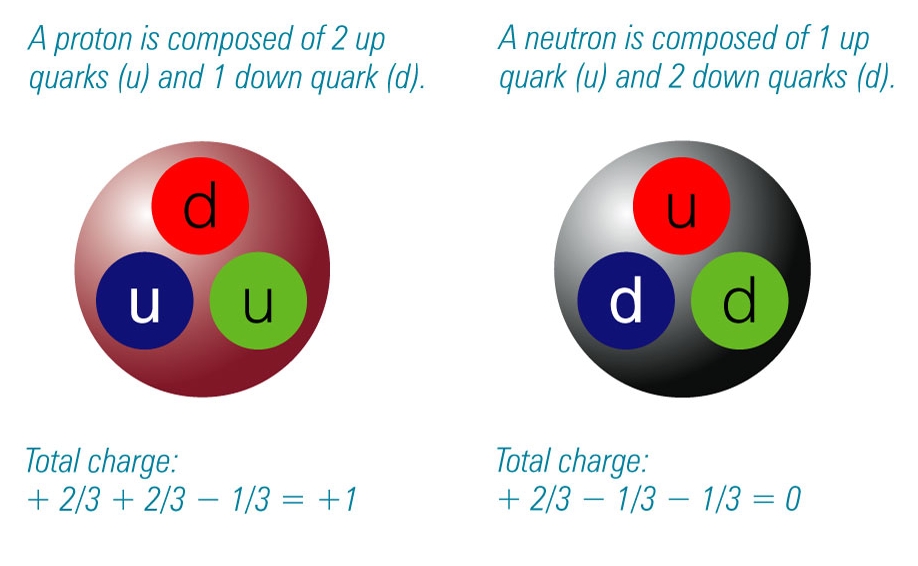
Quarks Fundamental Particles, Three Quarks in Every Proton and Neutron
I post this early, just to keep it on everybody's radar screen: 5 Bonus Points are available to all students if the following condition is met: 80% class participation in filling out the official IUI Online Course Evaluation (near the end of semester).
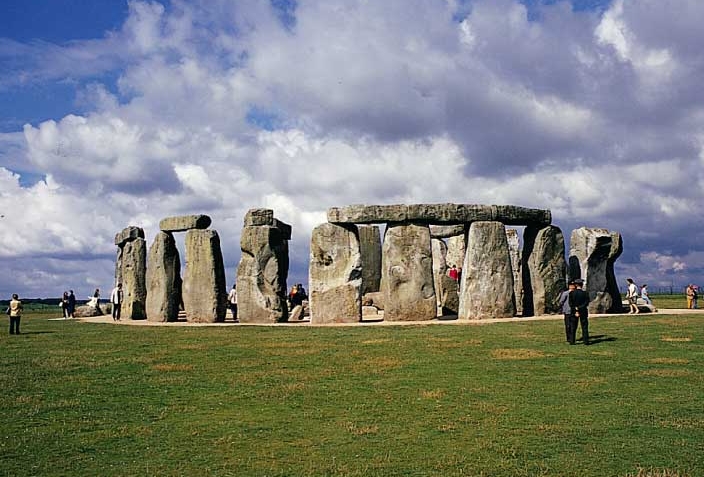
Astronomy, the Oldest of the Sciences, 5000 Years Old: Stonehenge
Approaching Modernity: Galileo Galilei's 1610 AD Notebook Page (Who Needs Computers?)
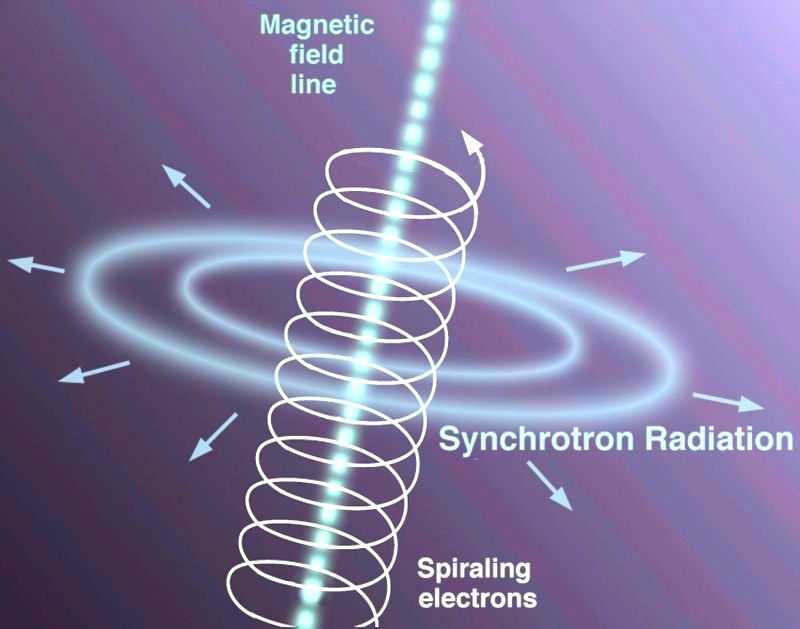
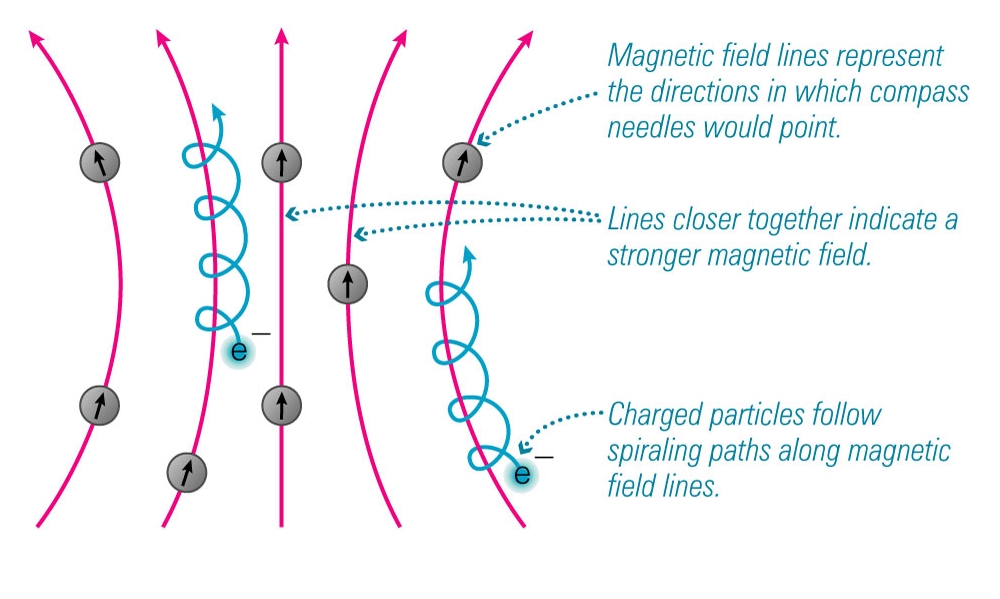
Magnetic Field Lines "Trap" Moving Charged Particles (Thus They Spiral)
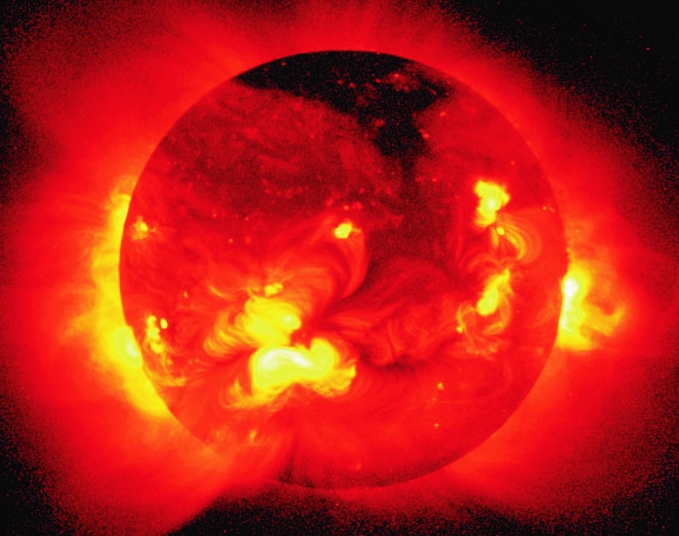
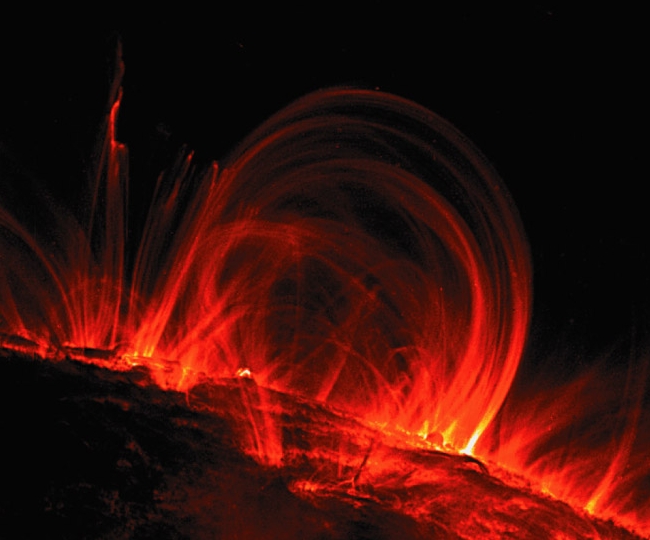
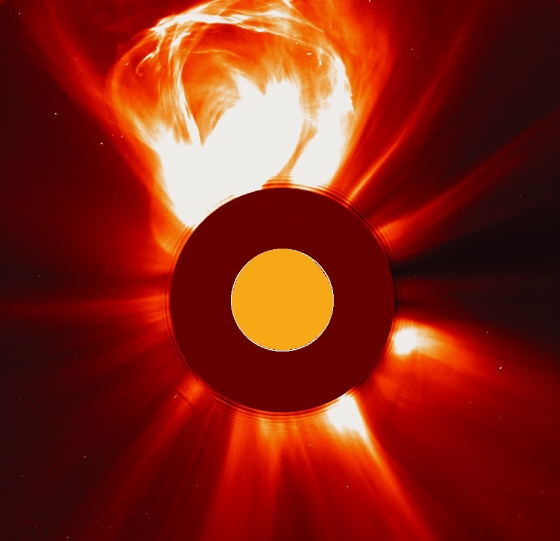
Coronal Mass Ejection (Orange Disc is Photosphere, Red Disc is Chromosphere, X-Ray Photography)
Syllabus (PDF). Please print and keep with your notes.
Master Schedule (PDF). Please print and keep with your notes.
These documents will likely change/update throughout the semester. Please check that you have the latest versions.
Check here ( http://woodahl.physics.iupui.edu/Astro105MW/ ) for the latest information regarding our particular class cancellation(s)
Weather related cancellations will be announced on this page -- Please do not email me asking if class has/will be cancelled
Many thanks to Ryan Bertram (Astro A100 student), who introduced me to this neat YouTube video (courtesy of Rob Bryanton, Canadian author) that discusses the ten possible dimensions of our universe.
Many thanks to Tim McCormick (Astro A100 student), who introduced me to this fantistic webpage that models early solar system formation.
Many thanks to Elizabeth Potter (Astro A105 MW student), who showed me this neat webpage highlighting the relative sizes from the Local Group down to Quarks (and the corresponding orders of magnitude, or powers of ten)
Department of Physics, IUI - Updated on April 18, 2024 at 1:35 PM EDT